'Alpine' Healthy Eco Systems Collection
'Alpine' Healthy Eco Systems Collection
Original
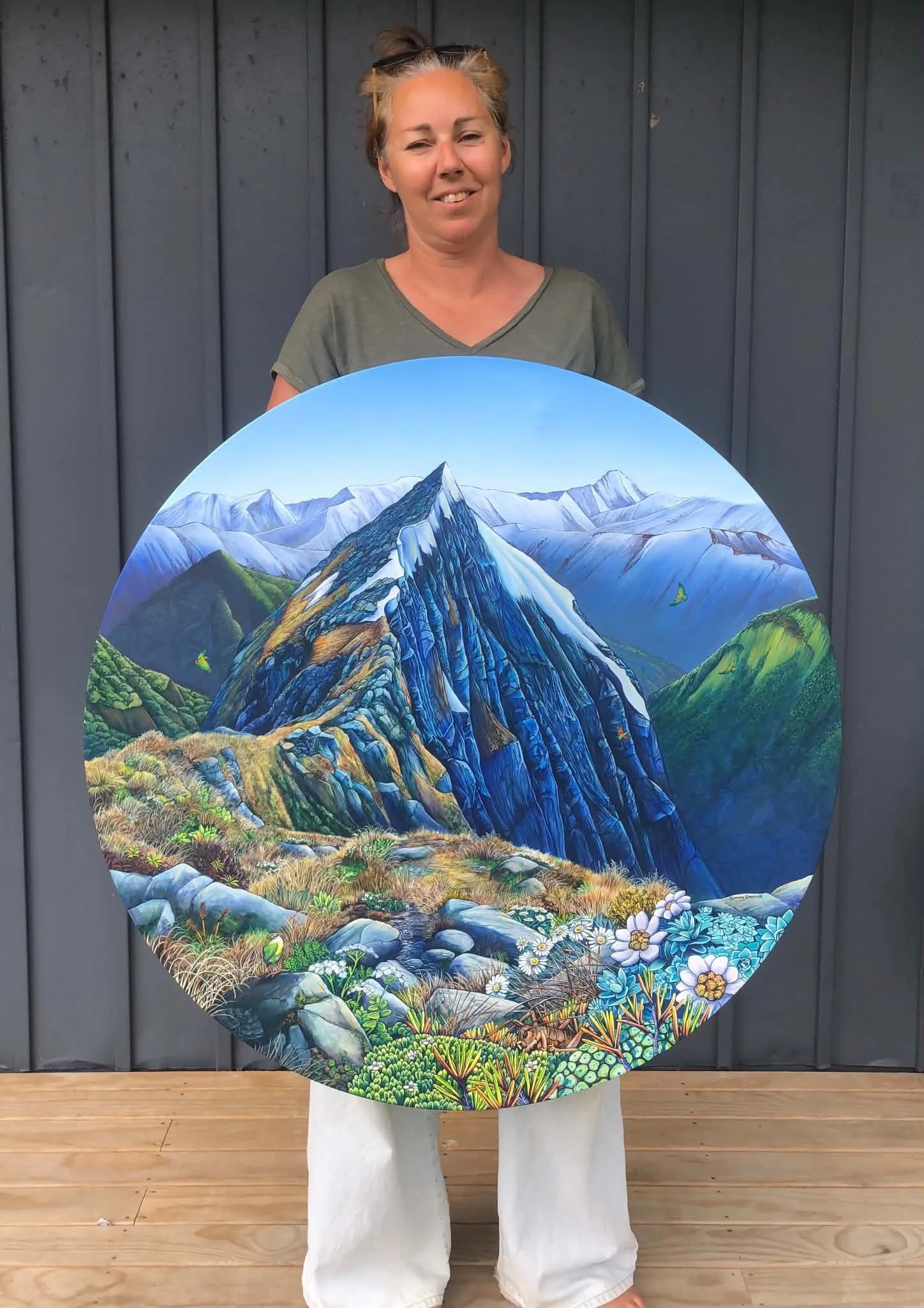
80cm diameter · Acrylic on canvas $5800
Each original is stretched around a wooden frame and is ready to hang. Originals can be couriered anywhere in New Zealand.
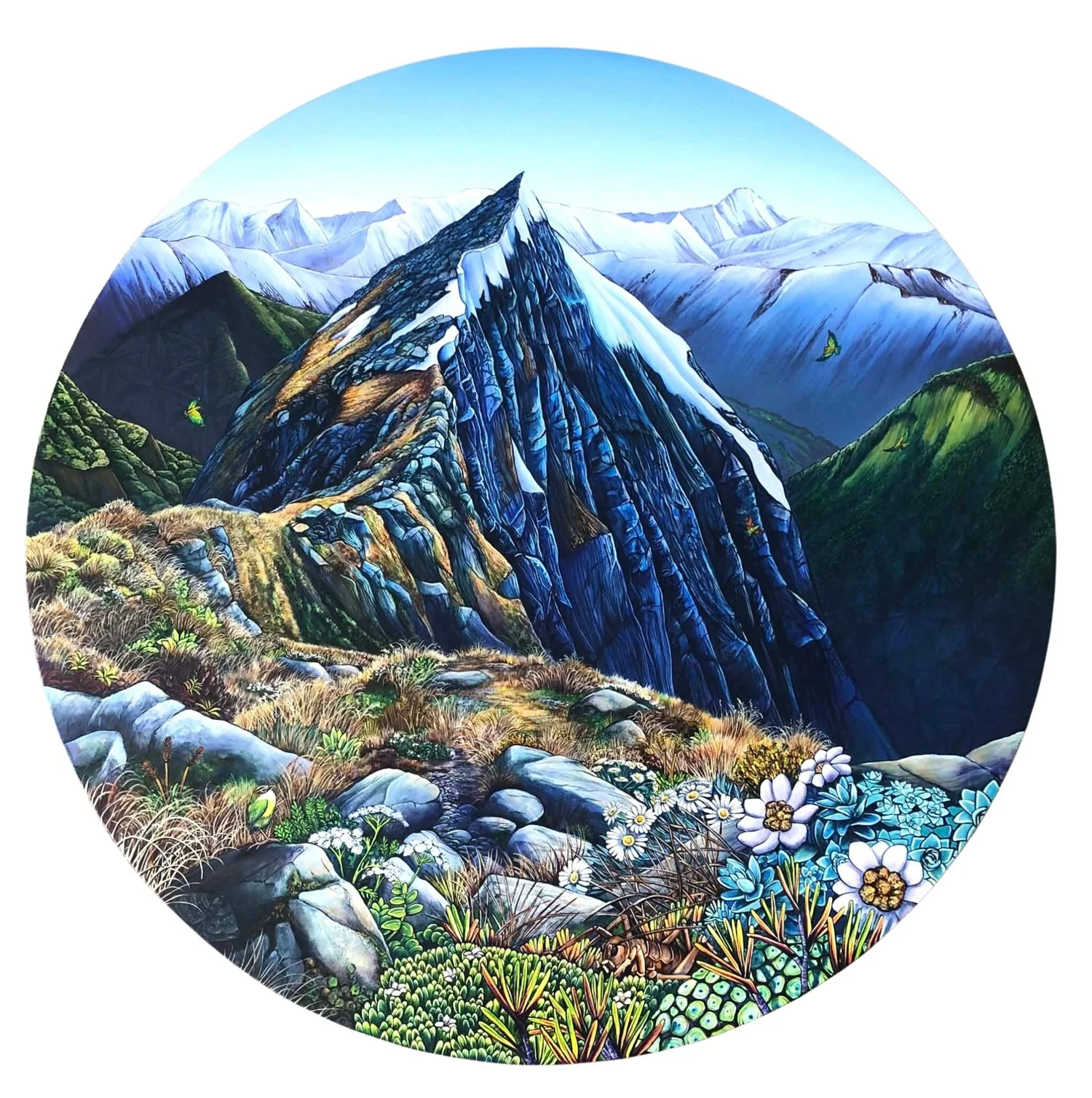
What might a healthy alpine ecosystem look like if native wildlife had the opportunity to thrive?
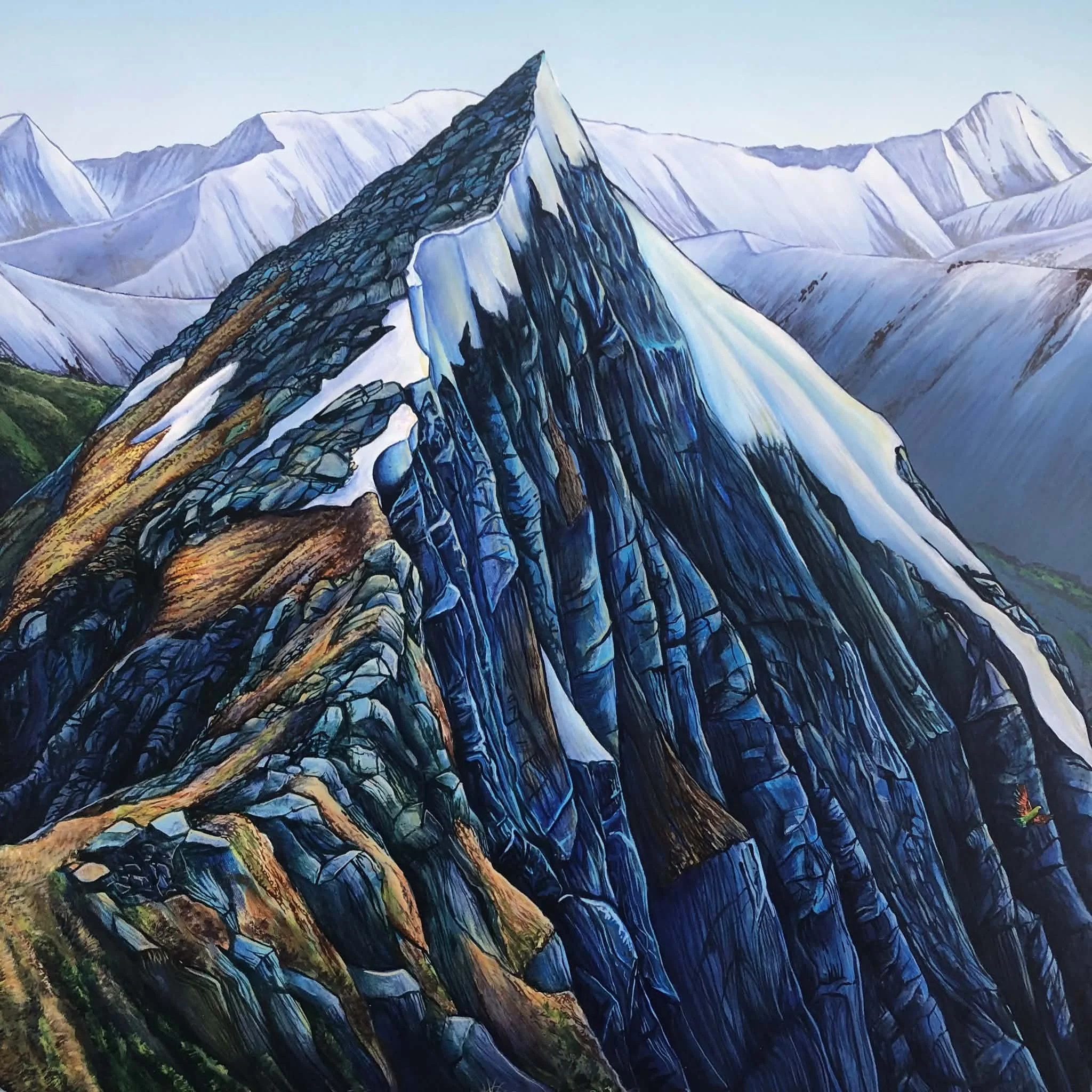
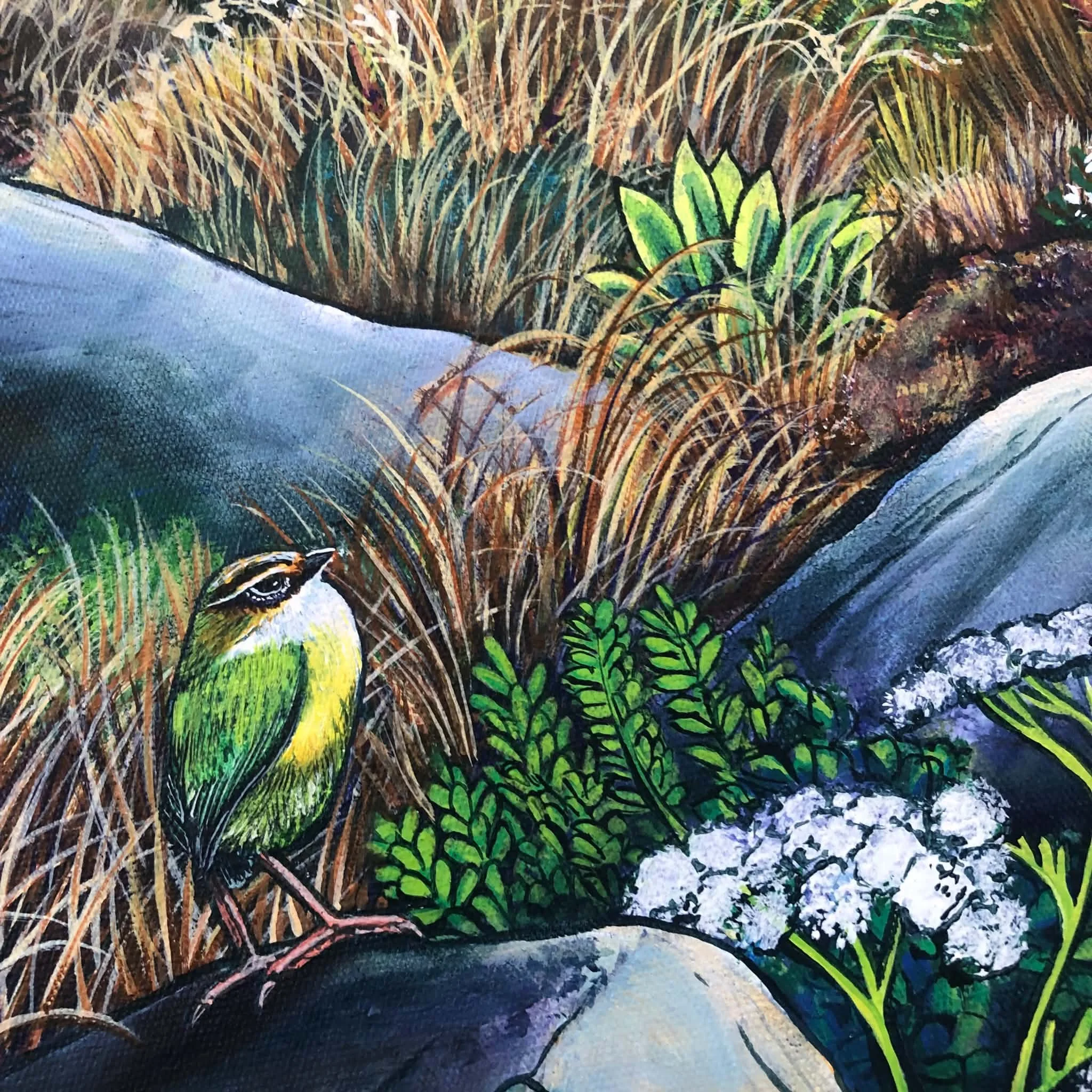
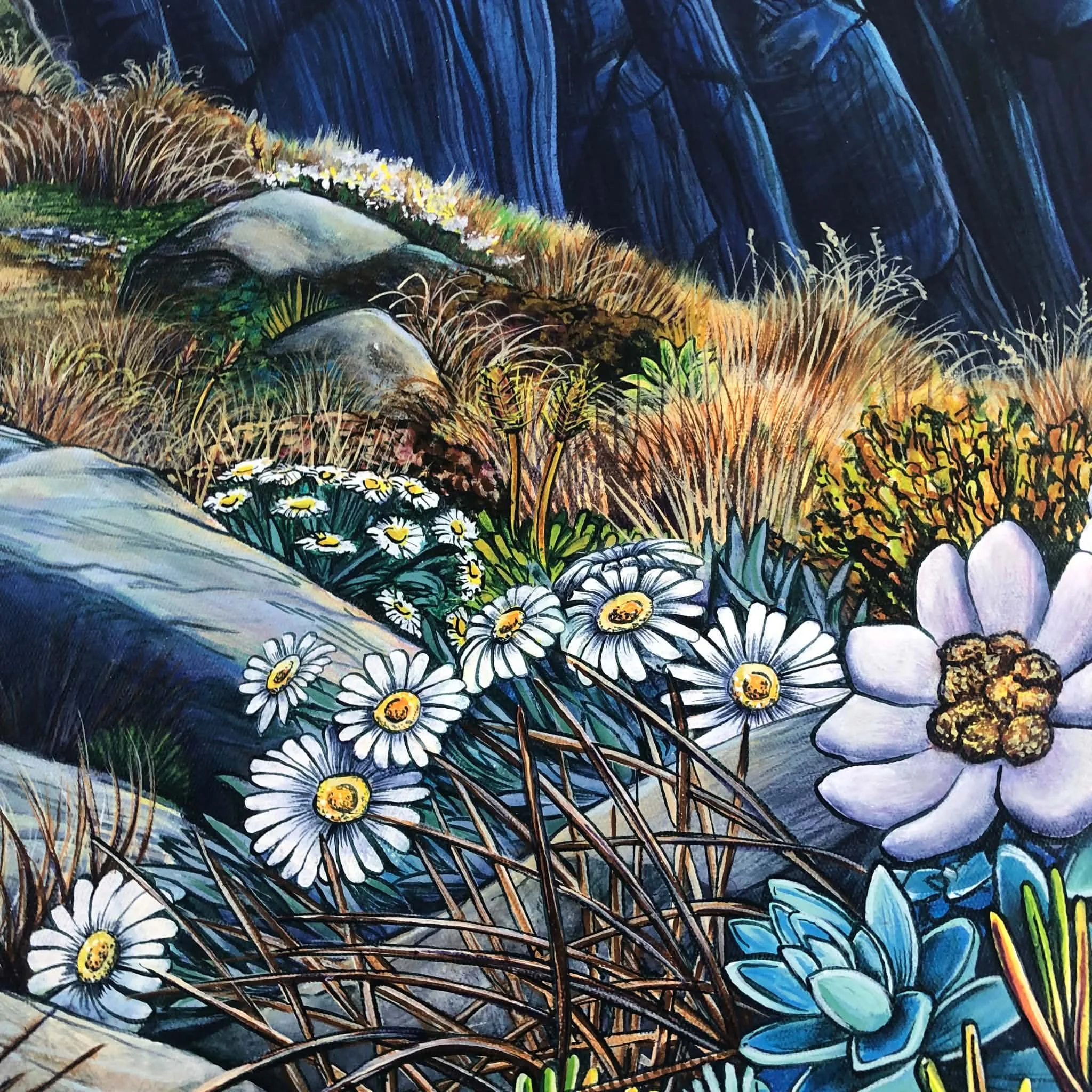
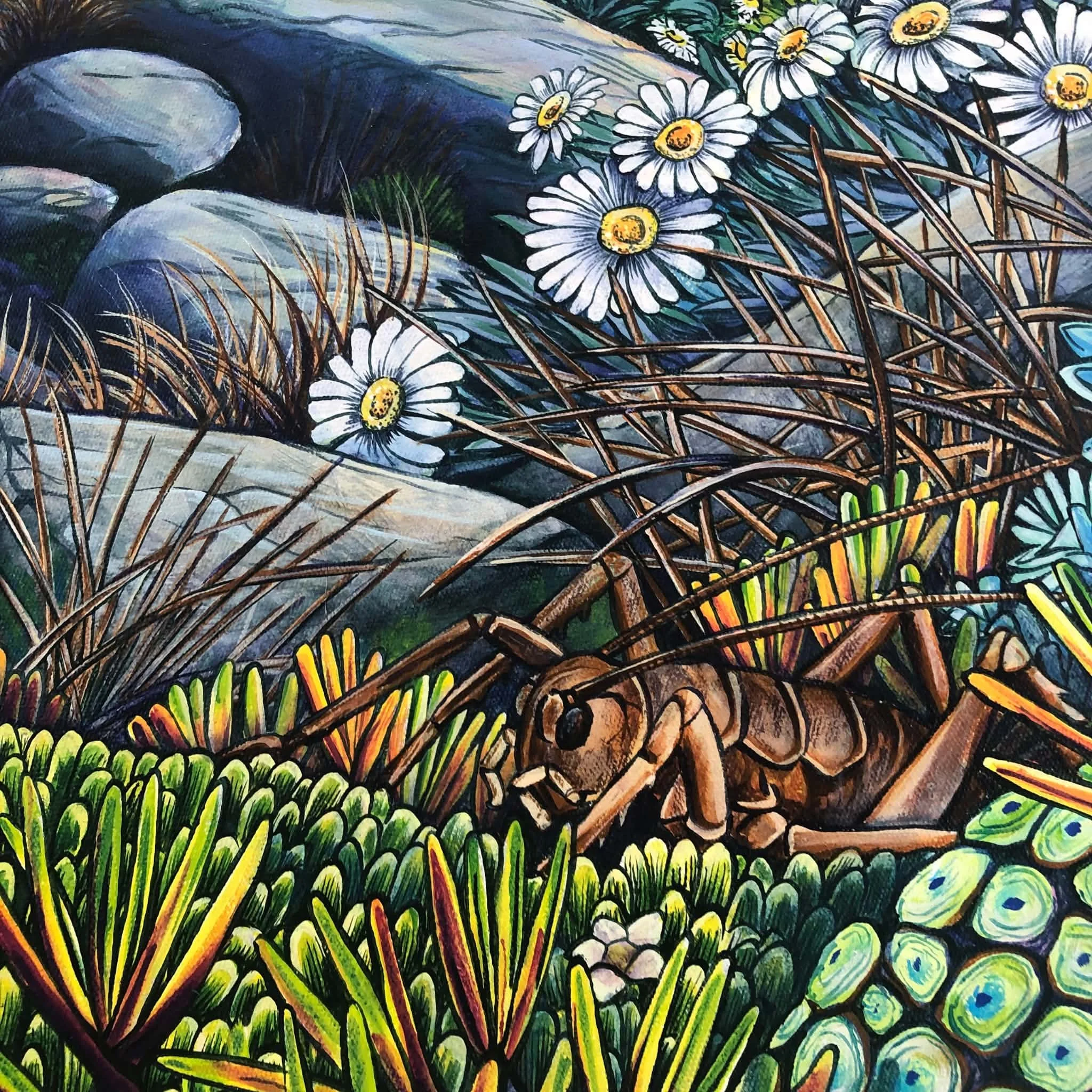
The alpine painting moves from vast mountains and ridges into herbfields, rocks and the small pockets of life hidden among them. I wanted to capture both the scale of these landscapes and the remarkable diversity that exists within them from kea and rock wren to alpine wētā, tiny moths and specialised plants. Many of the details are deliberately small and easily overlooked. Plants such as speargrass, vegetable sheep, celmisia, edelweiss, dracophyllum and tussock fill the foreground, creating the sense of a living ecosystem rather than simply a mountain landscape.
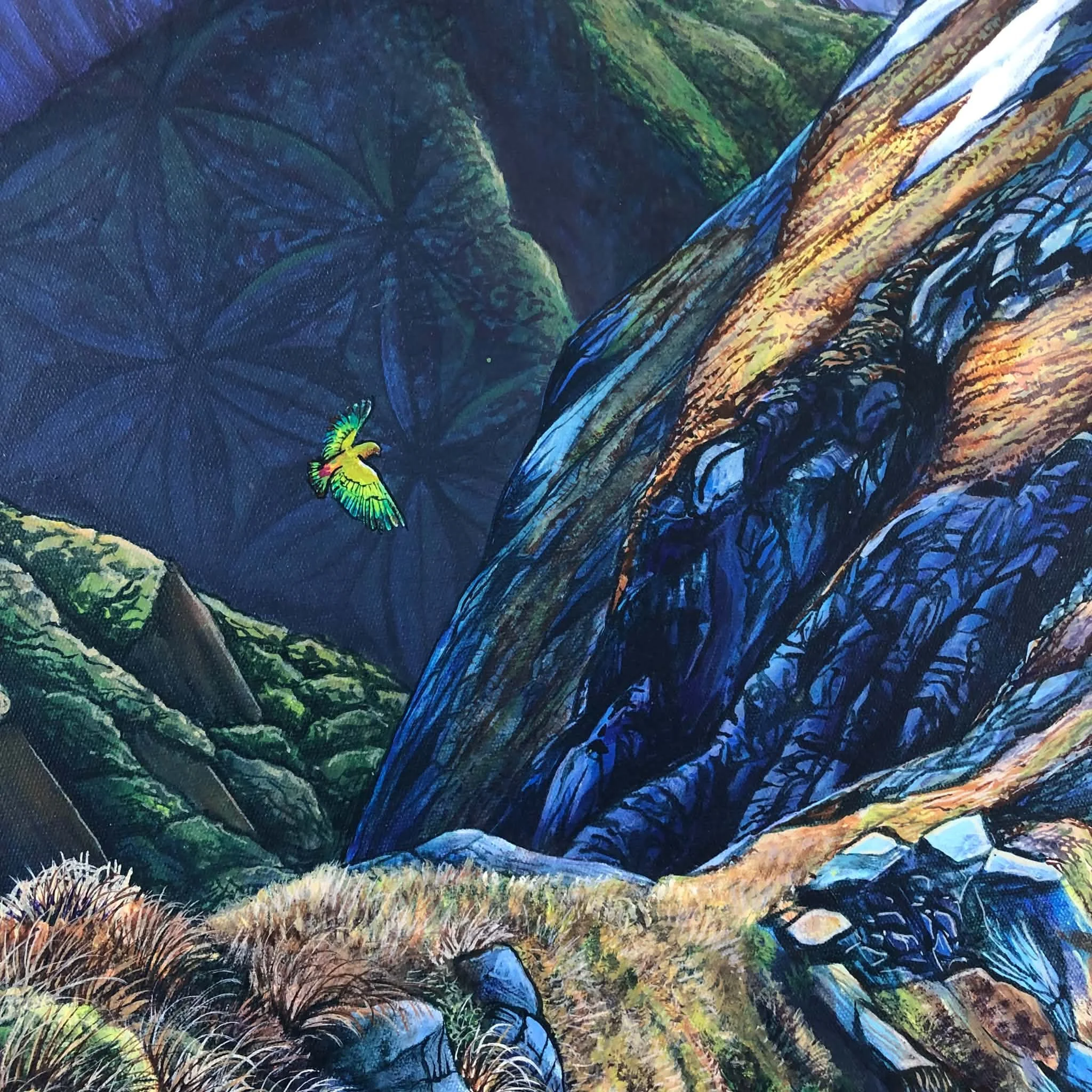
These paintings work at two scales. From a distance they read as expansive landscapes; closer inspection reveals tiny species that would never realistically be visible at that distance. This invites the viewer to move between the vastness of the landscape and the intricate life within it.
Throughout these paintings, weaving appears in the way ridges cross through the composition, suggesting the relationships between everything within an ecosystem. The subtle Flower of Life pattern echoes this idea of connection. For me, its overlapping circles represent life cycles, renewal, movement and the continuation of life.
Each painting also has a central animal looking directly at the viewer. Their gaze reflects the powerful moments of connection people described when sharing their own encounters with wildlife and invite us to consider our place within these ecosystems.
The species in the paintings came from both the stories people shared during the project and my own discoveries while researching these environments. Some are familiar icons; others are tiny, obscure or vulnerable species that might otherwise go unnoticed.
Kea anchors the painting in the alpine landscape, while rock wren represents the resilence needed to thrive in this high-country setting. Alpine wētā represents the hidden life between the rocks and their remarkable ability to survive extreme conditions. Gingidia montana (New Zealand aniseed) and the Gingidiobora moth reveal another layer of connection. The moth's larvae depend on Gingidia, illustrating how protecting one part of an ecosystem can also help protect the species that depend upon it.
Together, the paintings imagine a future where these species continue to thrive and healthy ecosystems are simply part of everyday life.